
About our services
What is a BS5837 tree survey?
A BS 5837:2012 tree survey records and assesses trees on or adjacent to a development site in line with British Standard BS 5837:2012 Trees in relation to design, demolition and construction – Recommendations. It identifies which trees should be retained, their condition and quality, and the constraints they place on a proposed design.
Most local planning authorities require a BS5837 tree survey where trees are present on or near a site being considered for development — from a single-plot extension to a multi-unit scheme.
Building on clay? Our guide to building near trees on clay soil explains why your engineer needs the tree survey early.
01 — Tell us about your project
Send the site address, plans and details of the proposed work
02 — Receive a quotation
We confirm the required service, scope, fee and timescale
03 — Site survey
The site is inspected and relevant tree data recorded
04 — Report & plans
Your schedule, constraints plan and report are issued
BS 5837 tree surveys for planning applications
Professional tree surveys and constraints plans to identify arboricultural constraints and inform the design and planning process.
– Your site contains trees, or trees on neighbouring land overhang or are close to the boundary
– You’re submitting a planning application and the local authority requires arboricultural information
– You want to understand tree constraints before committing to a design
– A previous application was refused or delayed due to insufficient tree information
– Survey and record all relevant trees, including species, dimensions and condition
– Categorise each tree in line with BS 5837 (A, B, C or U quality)
– Calculate root protection areas (RPAs)
– Prepare a Tree Constraints Plan showing RPAs and crown spreads
– Provide a written schedule and constraints report
A tree survey schedule, a Tree Constraints Plan (PDF and CAD-compatible drawing), and a written report suitable for submission with a planning application — including recommendations for how the design can work around retained trees. Our BS 5837 tree surveys start from £450, and you’ll get a fixed-fee quote before you commit; see what affects the cost of a tree survey.
We carry out BS5837 tree surveys mainly across Essex and Suffolk, from Chelmsford, Colchester, Southend-on-Sea, Brentwood and Epping Forest to Ipswich, Sudbury and Stowmarket, and we’re happy to attend sites throughout the UK, including London and Kent, without penalising clients for distance. See the areas we cover.
What the Tree Constraints Plan shows, and why timing matters
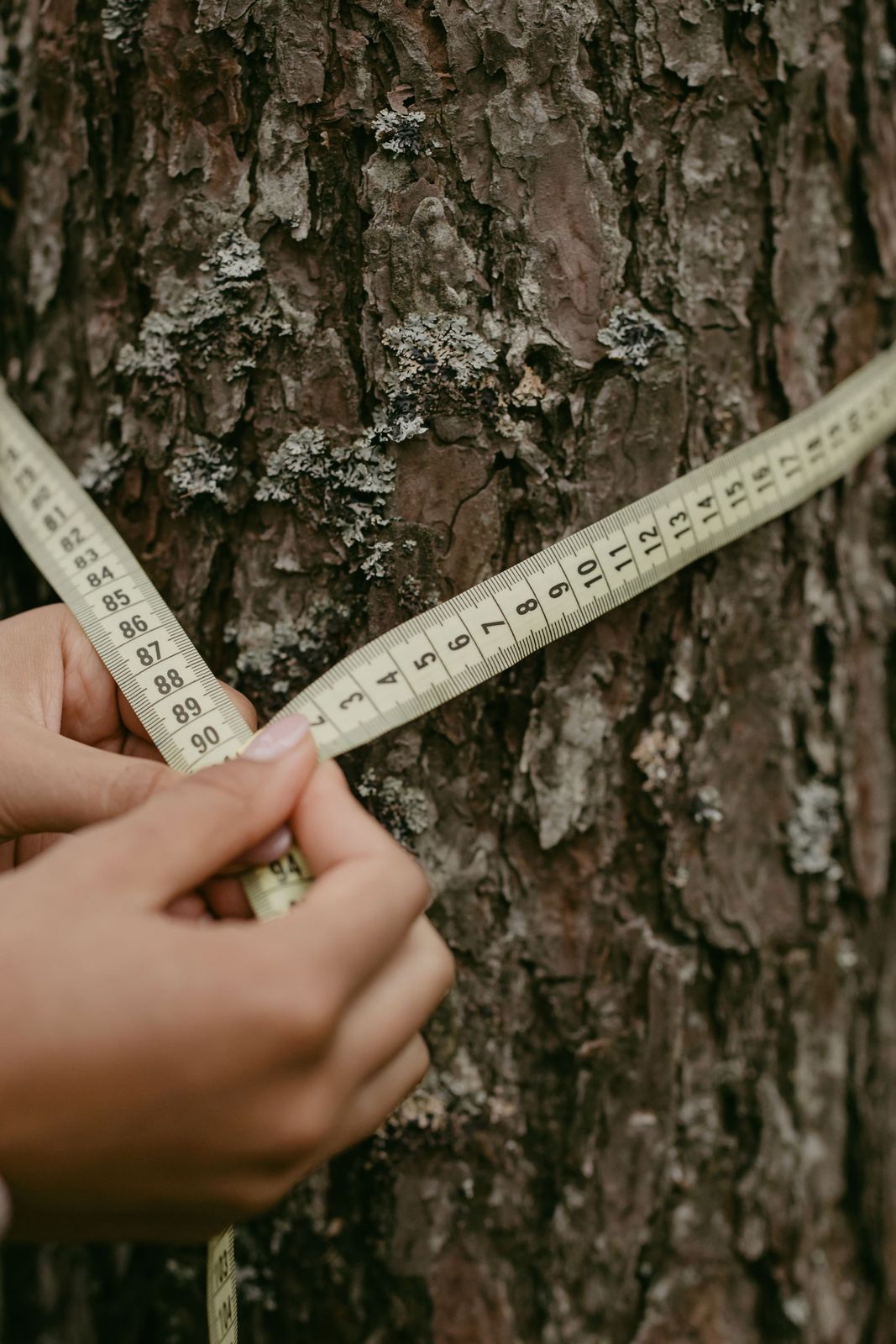
The Tree Constraints Plan is the drawing your designer will use most. It plots every surveyed tree on the site plan, labelled with its quality category under BS 5837:2012: A for high quality, B for moderate, C for low, and U for trees in such poor condition that they can’t realistically be kept for more than about ten years. It also shows each tree’s canopy spread and its root protection area (RPA). The RPA is the minimum area around a tree that needs protecting from construction. For a single-stemmed tree, its radius is 12 times the stem diameter measured at 1.5 metres above ground.
This is why the survey should be the very first thing you commission, before the layout is drawn. BS 5837 is written so that tree information shapes the design, not the other way round. If the plan comes first, you can see straight away where building is realistic and which trees are worth designing around. If it comes last, a clash with an important tree can mean redrawing the scheme. Our guide do I need a tree survey for planning in Essex?